
Popular influencer’s TikTok video spotlights Miami University's accessible ‘foot button’ elevators
Dan Darkow, director of the Miller Center for Student Disability Services, credited with advocating for universal design
Popular influencer’s TikTok video spotlights Miami University's accessible ‘foot button’ elevators
Dan Darkow, director of the Miller Center for Student Disability Services, credited with advocating for universal design
Dan Darkow, director of the Miller Center for Student Disability Services, said he was “genuinely shocked” when he was first sent a TikTok video praising Miami University’s accessible elevator at Shriver Center that features floor panel buttons.
The glowing review came from influencer Shane Burcaw, who along with his wife, Hannah Burcaw, are known to their 634,000 social media followers as “Squirmy and Grubs.”
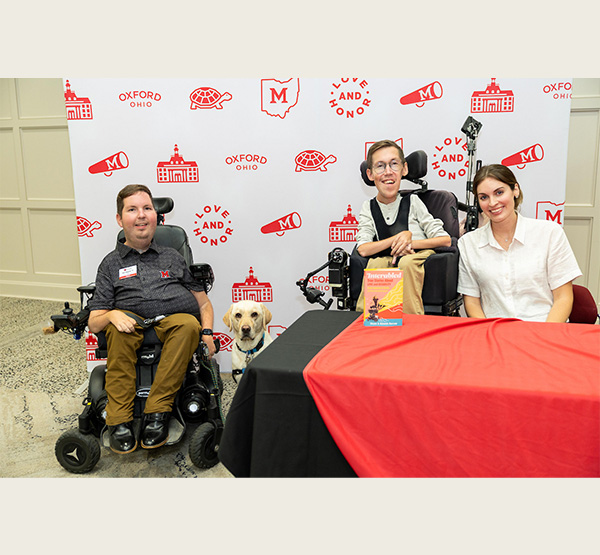
Darkow MA ’17 — credited with advocating for enhanced elevator accessibility at Shriver and elsewhere on campus — said the video came after the center welcomed the popular influencers to Miami for “Breaking Barriers: A Conversation with Squirmy and Grubs.”
‘Wow! That’s so cool’
Shane Burcaw, who has spinal muscular atrophy, runs a blog and nonprofit organization dedicated to enhancing the quality of life for individuals with disabilities and providing medical equipment to people with neuromuscular diseases.
He shared his experience using the accessible elevator at Shriver Center.
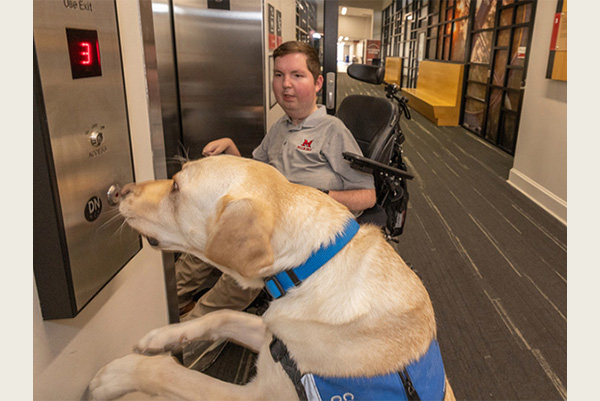
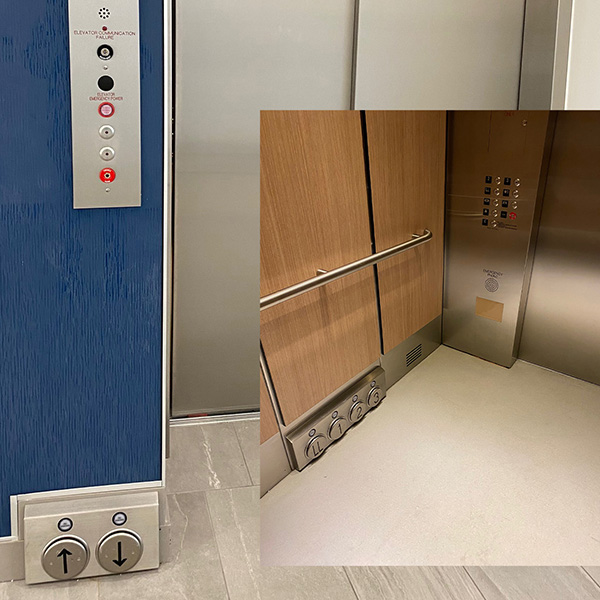
“I’m about to use an elevator completely by myself, for the first time ever, thanks to adaptation!” he said in the TikTok video as he demonstrated using the exterior floor panel buttons showing UP and DN.
“But wait! There’s more!” he said as he entered the elevator, in which wheelchair users can use a wheel to select the floor they would like to go to because the floors are numbered on the interior floor panel buttons. Burcaw demonstrated using his wheel to select going down to the first floor.
“Wow! That’s so cool. I wish every elevator ON EARTH had foot buttons. That’d be so helpful!” he said in the video.
Darkow, who advocated for getting the floor panel buttons installed, said, “I had no idea they had captured that video while visiting and was excited to see how they appreciated the intentional design we brought to campus. Hannah and Shane have incredible reach from their social media platforms, and I was glad Miami could be featured in implementing universal design.”
Darkow added, “We currently have these types of elevators in Shriver, Armstrong, and Clinical Health Sciences.”
A wheelchair-friendly campus
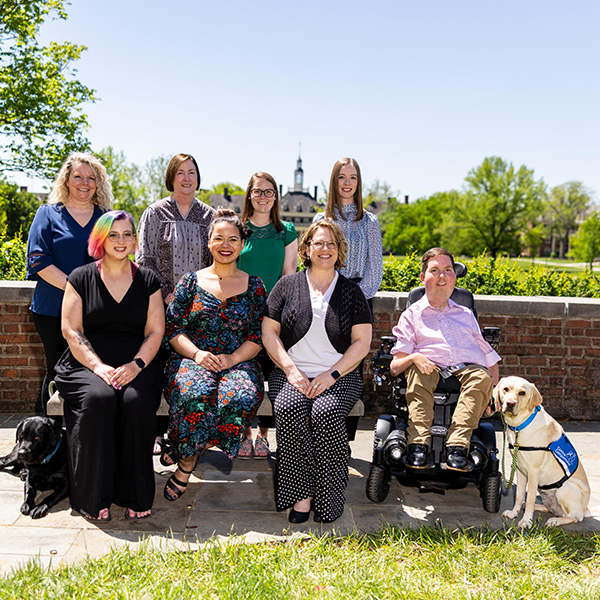
In 2021, Miami was named one of 20 colleges that create wheelchair-friendly campuses and cultures that promote an inclusive college experience by Wheels on Campus, in the first-of-its-kind guide.
Darkow, who earned his master’s in Student Affairs in Higher Education, said he first learned of this innovative and highly accessible concept during his graduate studies while researching disability rights in the United States for one of his classes.
Mitzie Willis, administrative assistant for the Miller Center for Student Disability Services, praised Darkow for always identifying ways to support the Miami community’s accessibility needs, including when the center team moved to the Shriver Center in 2017.
“Dan advocated for making elevator use more inclusive and intuitive for individuals with disabilities, aligning with our shared commitment to fostering an equitable and accessible campus environment,” Willis said. “He is the reason Miami has those fabulous elevators.”
Miami is now piloting a new style of accessible push button at an accessible entrance for Upham Hall and at the entrance to Patio Grill on East Quad.
“These accessible push buttons offer a vertical design accommodating a wider range of access needs,” Darkow said.
How the elevators came about
Darkow learned about Ed Roberts, an international leader and educator in the independent living and disability rights movements based in Berkeley, California.
“Following his passing in ’95, the Ed Roberts Campus was created and designed to be a center dedicated to fostering collaboration and improving services and opportunities for people with disabilities,” he said.
In those videos, Darkow said he first saw the floor panel buttons installed and “knew that if I had an opportunity to improve elevator access on campus, this would be a part of my plan.”
Darkow was a graduate student at Miami when initial discussion occurred about moving Student Disability Services from the ground level of Nellie Craig Walker Hall (formally the Campus Avenue Building) to the third floor of the Shriver Center.
“I was asked for my input regarding the placement of a Disability Services office on the third floor of a building,” he said. “It was important for me to consider the benefits and challenges that may present themselves with the new location.”
Darkow knew that Shriver’s central location on campus greatly increased access for students because it is across from the Armstrong Student Center.
“This location would also provide an opportunity for Student Disability Services, the Rinella Learning Center, RLC Testing Center, and the AccessMU Center to all be located together on the third floor, creating an academic and accessibility support hub for students,” he said.
At the same time, Darkow said he knew from personal experience that it was important to consider barriers that students with disabilities may face in accessing the office on a non-ground level.
“Ultimately, we reached a consensus that the third floor of Shriver would be a great location if we could ensure the elevator had additional accessibility features, ensuring it could be used independently by the widest range of people,” he said.
Darkow said he had personal experience with a horizontal panel at waist height at his undergraduate institution. He called that incredibly helpful and “wanted to adopt additional accessibility, mirroring the design I had seen on the Ed Roberts campus.”

Miami leaders supported the vision
Darkow said, “We had incredible support from our Physical Facilities department to bring this vision to fruition.” After the Shriver elevator was installed, they received positive feedback from users about the additional accessibility features.
“These additional panels not only supported folks with physical access needs, but it also was helpful for anyone who had their hands full or would prefer not to physically touch the elevator button in hopes of avoiding unnecessary germs,” he said.
With the support from the President's Office and Armstrong Student Center, in collaboration with Physical Facilities, a project to install additional accessibility panels in the student center was done in fall 2019.
Darkow noted that these types of buttons were part of the initial building design for the Cleveland Clinic Clinical Health Sciences and Wellness facility, which opened in 2023.
He hopes Burcaw’s TikTok video inspires other campuses and businesses to adopt the foot panel elevators.
“I hope anyone who saw the video will be inspired the next time they are a part of a remodel or a new construction project and they remember the major impact that can be felt from a small design shift, increasing elevator access for not only people with disabilities but everyone,” he said.
Darkow is always looking for ways Miami can further support the community's accessibility needs.
“Physical accessibility is just one aspect of the larger accessibility landscape here at Miami that we are consistently working to improve and make better for everyone,” he said.
“Over the past year, we have addressed uneven sidewalk barriers, added a few power operator doors to various locations on campus, increased navigation access with additional accessible features being highlighted on the campus map, and are finishing up renovating a new accessible restroom with an adult changing table on the third floor of Armstrong.”
Established in 1809, Miami University is located in Oxford, Ohio, with regional campuses in Hamilton and Middletown, a learning center in West Chester, and a European study center in Luxembourg. Interested in learning more about the Miller Center for Student Disability Services? Visit the website for more information.